
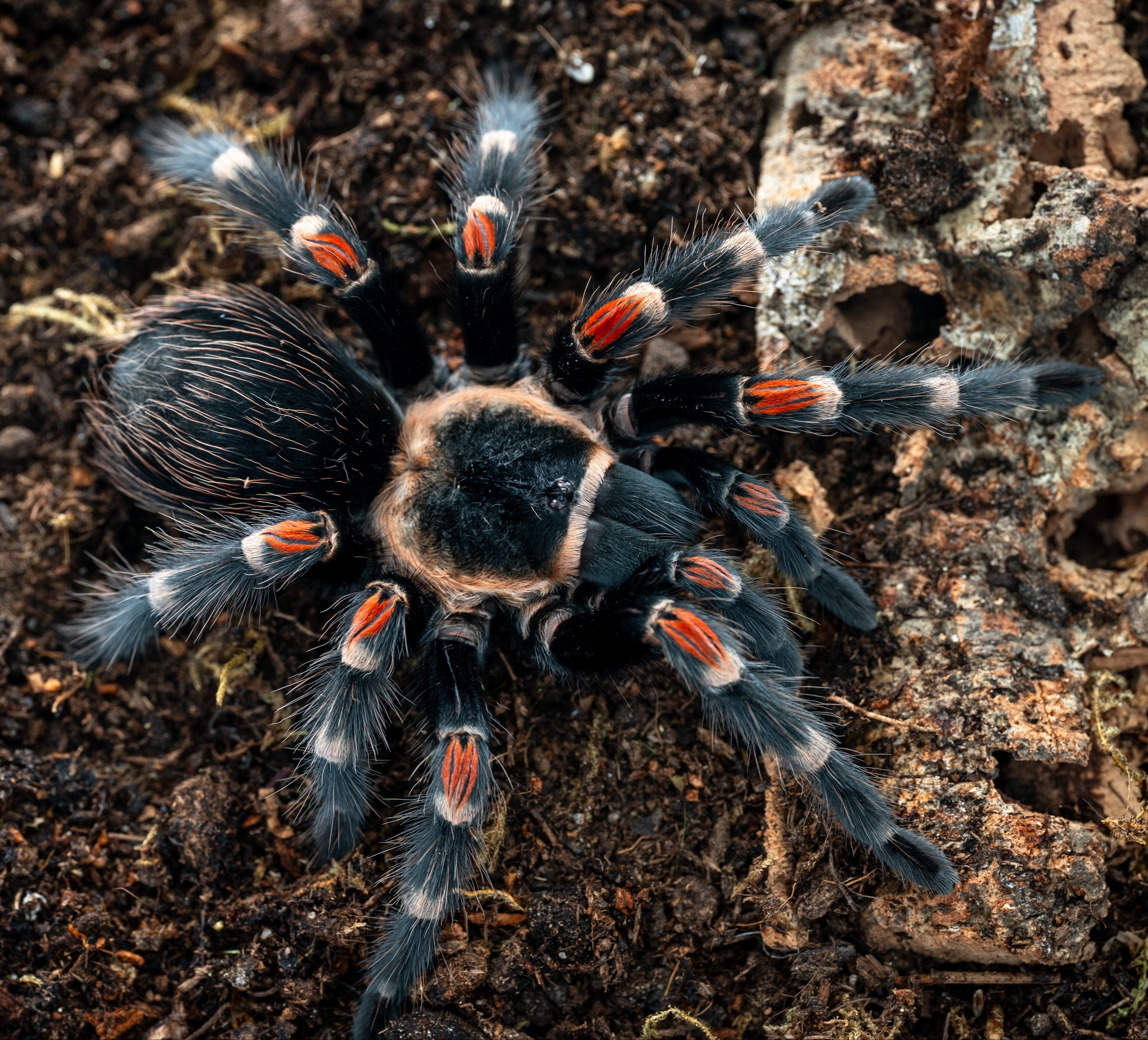
Tarantulas are among the most fascinating and diverse invertebrates on Earth. With over a thousand recognized species ranging from tropical rainforests to arid deserts, these animals have adapted to a remarkable range of habitats. Successful tarantula care comes down to one simple principle: replicate the natural environment as closely as possible.
In this comprehensive guide, we’ll cover everything you need to know about caring for terrestrial, arboreal, and fossorial tarantulas, along with special considerations for arid and semi-arid species. Whether you’re keeping a calm Grammostola pulchripes or a lightning-fast Cyriopagopus minax, this guide will help you create the perfect setup for long-term success.
🏜️ Terrestrial Tarantulas
Ground-Dwellers of the Tropics and Grasslands
Overview:
Terrestrial tarantulas spend most of their time on or just below the ground. They are heavy-bodied, slower-moving, and among the easiest to observe. These species often sit at their burrow entrance waiting to ambush prey, making them great display animals.
Common Terrestrial Species:
-
Grammostola pulchripes (Chaco Golden Knee) – Calm, hardy, and ideal for beginners.
-
Lasiodora parahybana (Brazilian Salmon Pink Birdeater) – Massive, fast-growing, and visually stunning.
-
Tliltocatl vagans (Mexican Red Rump) – Hardy and well-suited to drier conditions.
-
Nhandu coloratovillosus (Brazilian Black & White) – Bold, large, and visually striking.
Enclosure Setup:
Terrestrial enclosures should prioritize floor space rather than height. The enclosure should be roughly four to five times the spider’s leg span in width, with height limited to prevent injury from falls.
-
Substrate depth: 4–6 inches of compactable substrate such as coconut fiber, topsoil, or clay-soil mix.
-
Hides: A cork bark half-log or tunnel encourages natural behavior.
-
Temperature: 74–84°F (23–29°C).
-
Humidity: 60–75%.
-
Lighting: Ambient room light is sufficient—avoid direct sunlight or heat lamps.
Behavior & Feeding:
Terrestrial tarantulas are ambush predators and feed primarily on insects. Feed adults every 7–10 days and juveniles every 3–5 days. Remove uneaten prey after 24 hours. While most are docile, they can flick urticating hairs when threatened—so handle minimally.
🌿 Arboreal Tarantulas
The Canopy Dwellers
Overview:
Arboreal tarantulas live in trees and tall vegetation, creating silk retreats in hollows, bark tubes, and leaf clusters. They are lightweight, fast, and agile, often with bright coloration and elaborate web structures.
Common Arboreal Species:
-
Avicularia avicularia (Common Pinktoe) – Calm and adaptive, ideal for intermediate keepers.
-
Caribena versicolor (Antilles Pinktoe) – Brilliant blue and red, with heavy webbing and humidity needs.
-
Psalmopoeus cambridgei (Trinidad Chevron) – Fast, bold, and excellent climber.
-
Poecilotheria metallica (Gooty Sapphire Ornamental) – Dazzling blue Old World species with defensive temperament.
Enclosure Setup:
Arboreal tarantulas need vertical enclosures with excellent airflow. Height is more important than floor space.
-
Enclosure size: Height should be at least 1.5–2× the spider’s leg span.
-
Substrate: 2–4 inches of moisture-retaining substrate (coconut fiber or soil blend).
-
Decor: Cork bark tubes, driftwood, and branches for web anchor points.
-
Temperature: 76–84°F (24–29°C).
-
Humidity: 70–85%, depending on species. Mist lightly every few days and ensure cross-ventilation.
Behavior & Feeding:
Arboreals are alert and quick. They will often build silk retreats and rarely leave them except to feed. Offer smaller prey frequently. Avoid excessive handling, as their speed makes them escape risks.
🕳️ Fossorial Tarantulas
Masters of the Underground
Overview:
Fossorial species are true burrowers, living deep underground in self-made tunnels. They are secretive, defensive, and best suited for advanced keepers who appreciate observing natural engineering behavior.
Common Fossorial Species:
-
Cyriopagopus minax (Thailand Black) – Fast, defensive, and powerful Old World species.
-
Ephebopus cyanognathus (Blue Fang) – Stunning New World fossorial with metallic-blue fangs.
-
Chilobrachys natanicharum (Electric Blue) – Brilliant coloration and intense webbing behavior.
-
Hysterocrates gigas (Cameroon Red Baboon) – Large semi-aquatic species known for deep burrows.
Enclosure Setup:
Provide a tall enclosure with deep substrate to allow natural burrowing.
-
Substrate depth: 10–14 inches (25–35 cm) of compactable material that holds shape.
-
Starter burrow: Place a cork bark or tunnel at an angle to help initiate digging.
-
Temperature: 75–82°F (24–28°C).
-
Humidity: 80–90%, maintained through deep substrate moisture and gentle corner watering.
-
Ventilation: Moderate airflow to prevent stagnation while retaining humidity.
Behavior:
Fossorial tarantulas are reclusive and defensive. They rely on retreat and speed rather than aggression. Observe them at night when they are most active. Avoid disturbing the burrow.
☀️ Arid & Semi-Arid Tarantulas
Desert Survivors and Seasonal Dry Forest Dwellers
Overview:
Arid and semi-arid species come from scrublands, thorn forests, and dry grasslands. These tarantulas thrive with good airflow, moderate warmth, and limited surface moisture.
Common Arid & Semi-Arid Species:
-
Aphonopelma chalcodes (Arizona Blonde) – Docile desert species adapted to cooler, dry habitats.
-
Brachypelma hamorii (Mexican Red Knee) – Iconic, slow-growing, and highly tolerant of dryness.
-
Grammostola pulchra (Brazilian Black) – Semi-arid grassland species that prefers dry substrate and steady humidity.
-
Tliltocatl sabulosus (Guatemalan Red Rump) – Hardy and adapted to transitional dry forests.
Key Adjustments:
-
Keep substrate dry on top with slightly moist lower layers.
-
Always provide a water dish—dehydration is a bigger risk than low humidity.
-
Mist lightly only every 7–10 days.
-
Use strong ventilation to avoid mold and mites.
-
Temperature: 75–88°F (24–31°C) with cooler nights.
-
Humidity: 50–65%.
Even desert species benefit from localized humidity zones beneath hides or in their burrows—mimicking natural underground microclimates.
🍽️ Feeding, Molting & General Husbandry
Feeding:
Offer gut-loaded crickets, dubia roaches, or mealworms. Juveniles can be fed 2–3 times per week, while adults typically eat once every 7–10 days. Remove uneaten prey to prevent stress or injury during molting.
Molting:
A tarantula preparing to molt will often refuse food, darken in coloration, and become lethargic. Maintain humidity and avoid disturbance until the molt is complete and the exoskeleton hardens (typically 7–10 days).
Water & Humidity:
Always provide a shallow water dish, even for arid species. Tarantulas may not drink often, but consistent access helps maintain internal hydration.
Cleaning:
Spot clean as needed. Full substrate changes are rarely necessary—only replace substrate if there’s mold, pests, or excess waste buildup.
⚖️ Environmental Summary
| Category | Temperature | Humidity | Enclosure Type | Substrate Depth |
|---|---|---|---|---|
| Terrestrial | 74–84°F | 60–75% | Horizontal | 4–6 in |
| Arboreal | 76–84°F | 70–85% | Vertical | 2–4 in |
| Fossorial | 75–82°F | 80–90% | Deep, Tall | 10–14 in |
| Arid / Semi-Arid | 75–88°F | 50–65% | Horizontal / Burrowing | 4–8 in |
🧠 Final Thoughts
Tarantula keeping is less about decoration and more about replicating natural microclimates. Every species has evolved to thrive in specific humidity, substrate, and temperature conditions. By studying their native habitat and behavior, you can provide an environment that encourages natural activity and long-term health.
A calm, well-fed tarantula will sit confidently in its web or at the entrance of its burrow. A stressed one will constantly wander or retreat from food—an early sign to adjust humidity, substrate, or enclosure layout.
Whether you’re caring for a ground-dwelling Grammostola pulchripes, a canopy-hunting Caribena versicolor, or a deep-burrowing Cyriopagopus minax, consistency, observation, and respect for their natural instincts are the cornerstones of great husbandry.
Share:
チャイニーズケーブヤモリの飼育ガイド(ゴニウロサウルス ハイナンエンシス)